
By Michael Downing
Covent Garden
Covent Garden: So nice we went twice.
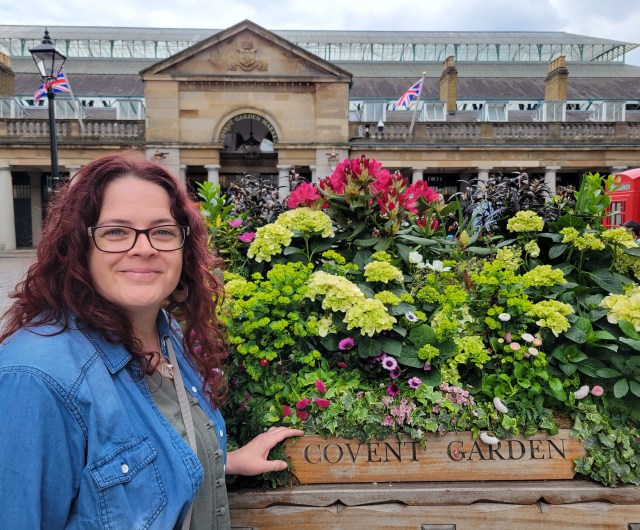
Located southeast of Soho, Covent Garden is famous for its central square, shopping, souvenirs, food, and the Royal Opera House (plus about half-a-million people, or so it seemed). We initially wandered over on Wednesday afternoon (it was reasonably crowded) and then again on Saturday night (it was packed).
On Wednesday, we hit Forbidden Planet on Shaftsbury Ave, a comic-book megastore featuring collectibles, comics, graphic novels, clothing, games, books and more. My taste in comics is pretty wide, having read DC, Marvel, Cracked, Mad, and various graphic novels throughout the years. That said, back in my time, the best work was being done on Batman. The Frank Miller stuff is great as is the work of Josh Loeb and Tim Sale. Not going down that particular rabbit hole right now though.
I also have a special place in my heart for The Incredible Hulk, who has gained massive popularity since I started reading about Old Jade Jaw back in the early 1970s.
As for proper books of my youth, I was initially drawn to Tolkien, and used to teach The Hobbit in freshman comp. [Reminder for me to write blog posts about My Comic Book history, My Tolkien History and my Video Game History.]
Anyway, after a stroll down comic-book memory land, the next thing I saw in Forbidden Planet was Star Wars merch. That’s another rabbit hole for me. I loved the first three movies–and I am particularly drawn to the mythology because of its connection to one of the biggest influences in my life: Joseph Campbell.
Unfortunately, I’ve attempted to watch the many Star Wars movies that have followed the first three and they just don’t stick for me. It’s almost like they are so aware that the are creating myth that the scripts become too predictable…too formulaic. To wit: Luke Skywalker or some semblance of a hero keeps doing The Hero’s Journey again and again: It begins with initial resistance to the endeavor. Then a threshold is crossed and the hero is drawn in. There is the battle for the soul of the community (and the soul of the hero along with it). There are helpers and challenges and in the end, the trials are overcome and order is restored.
I realize this is the narrative structure of 50 million books and movies, but the Star Wars stuff just doesn’t land. Maybe it jumps the shark for me because the Star Wars universe is so rich with characters and references that, for a casual fan, I start to see evidence of a particular compulsion on the part of the creators to include reflexive, repeated, intertextual references to the canon, which kind of go on endlessly. This may be the attraction for legions of fans, but, for me, it’s an instance where the work itself is now in charge, rather than the author(s), which creates problems for me. It’s like reading the work of George Bernard Shaw: The agenda has primacy and all elements serve the agenda. Not interesting to me. Kind of like CS Lewis clubbing me over the head with the Aslan/Jesus analogy, which I figured out when I was ten years old.
Through my years studying the world of literature, one of the topic I’ve been interested in is authorial intent. In a nutshell: when an author typically begins a work, they are free to do whatever they like. However, the deeper they go in the the narrative, the more restrictions creep in based on what has already been established. And when you go as deep as the Star Wars franchise, fan expectations begin to intrude, which causes the authors to be bound to the expectations of the fan base, which causes the narrative to deconstruct, at least for me.
All of this said: I LOVED, LOVED, LOVED THE MANDALORIAN. If you haven’t seen it and like good storytelling, check it out. Kudos to Jon Favreau and his team.
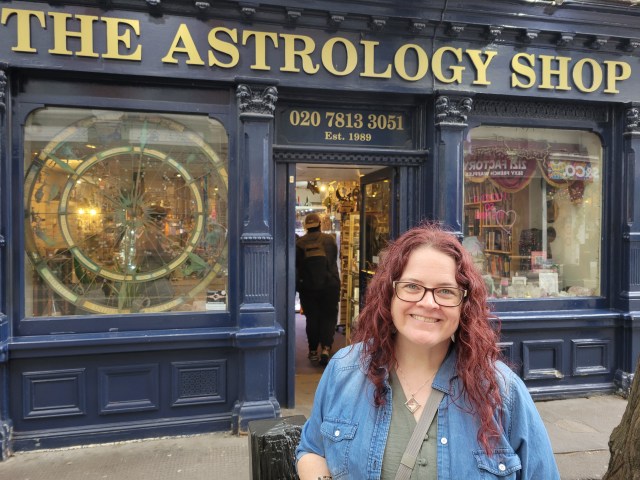
The Astrology Shop
After Forbidden Planet, we went across the street to The Astrology Shop, where we bought a tiny buddha incense holder and a small amount of incense. We find it useful to have a bit of incense to cover various smells along our travels, and while our rental was fine, it’s nice to use a bit of incense to counter cooking odors and cover the chemical odors of cleaning fragrances.
Our little buddha was cute and rather than putting the incense stick into the top of his head, you stick in his shoulder and it sticks out aslant. As we were cashing out, we asked for matches and the owner said, “Sure. I’ll can give you a lighter.” Then he tried to stand up and then–almost comically–just sort of tumbled onto the floor.
“Oh, my! Are you okay?” I said.
“I’m fine,” he said, laughing. “Just embarrassed.”
It was a curious moment. He just kind of teetered over in slow motion. He recovered, dug into a box, and handed us a lighter.
“Thank you,” I said.
“You’re welcome. Thanks for coming in.”
I think what happened to him–as a 60-something myself–is that he didn’t take that critical a moment when he first stood up to make sure his legs were awake before he put them into motion. Then when he needed them, they weren’t fully functional. This reinforces a practice that I’ve been trying to make use of these days: Make sure your legs are under you when you stand up from a seated position–especially in a public situation where there are lots of people and chairs and other obstacles, like a restaurant. Stand up, feel your legs, gather yourself, adjust your shirt, and then move forward. Nobody will judge you.
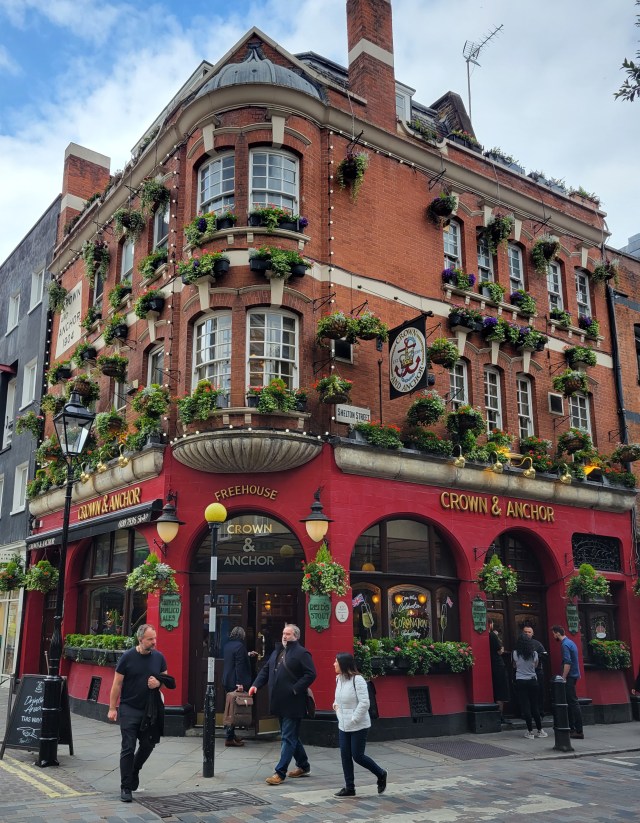
Crown and Anchor
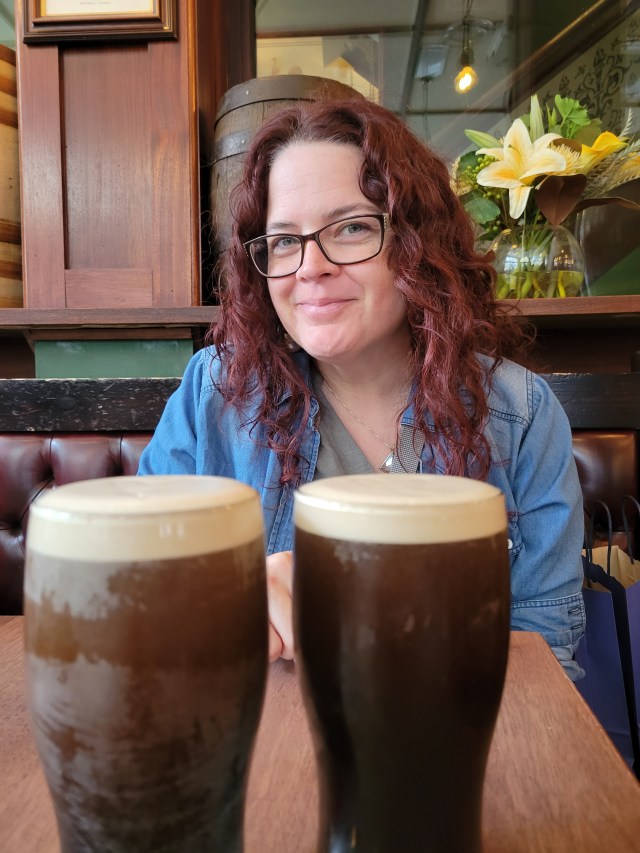
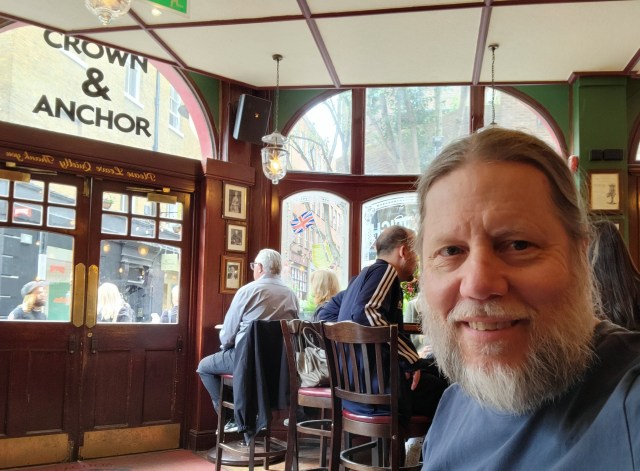
After The Astrology Shop, we went to the Crown and Anchor pub in Covent Garden. It was the middle of the day and usually we don’t drink during the middle of the day but we both kind of looked at it longingly. Then Jackie said, “I think it’s time to have our first pub experience!” So we went in and I ordered two Guinness and, boy, they were delicious.
There was a big group of people at the center table and they were raucous. It felt like they were there ostensibly to have drinks but they were really there to morph the energy of the group into a venue for telling jokes and being loud, which I had to admire. It was loud without being frightening. The group was not rowdy, just very vocal. Something I’ve not seen in typically in the US, where if the volume goes up, the likelihood of trouble increases accordingly.
The Tour Bus
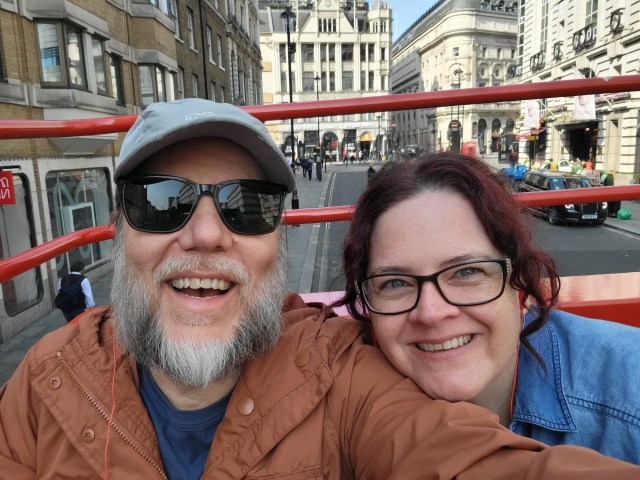
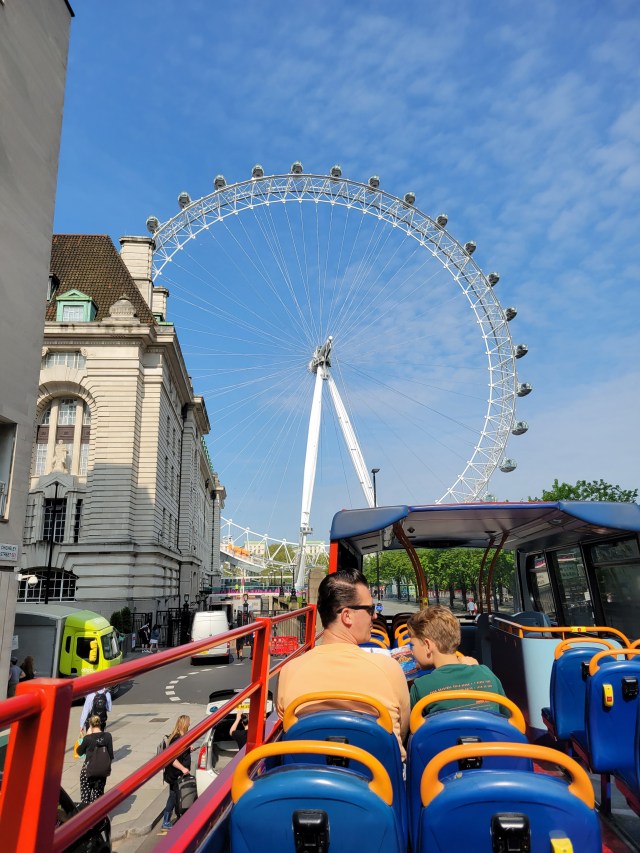
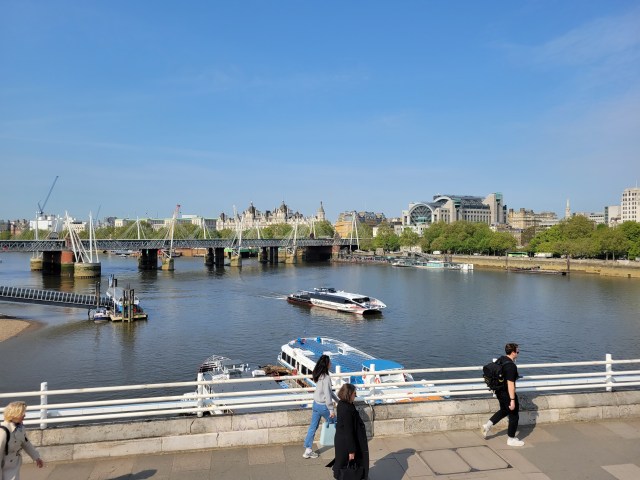
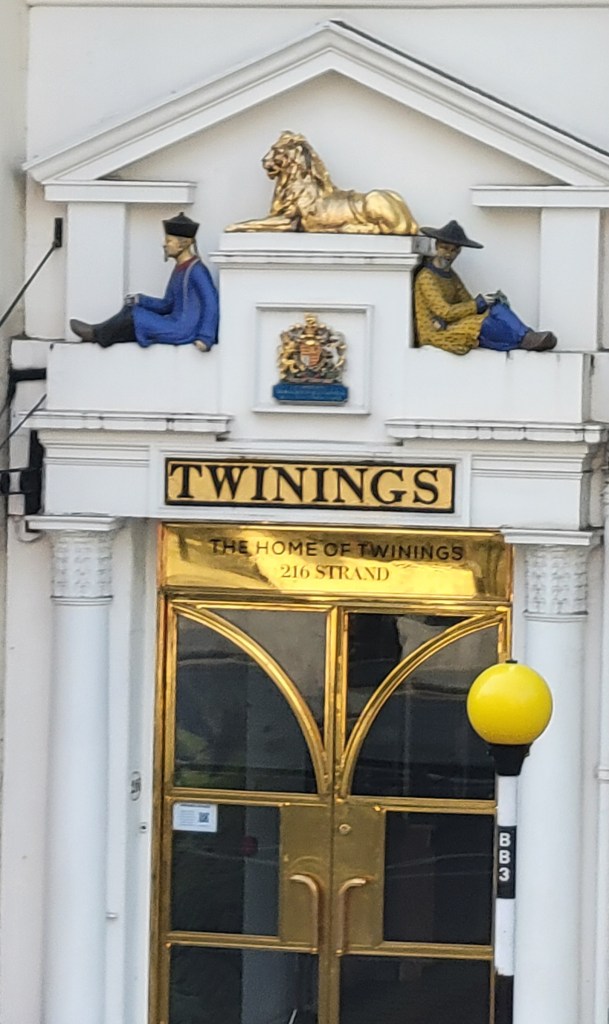
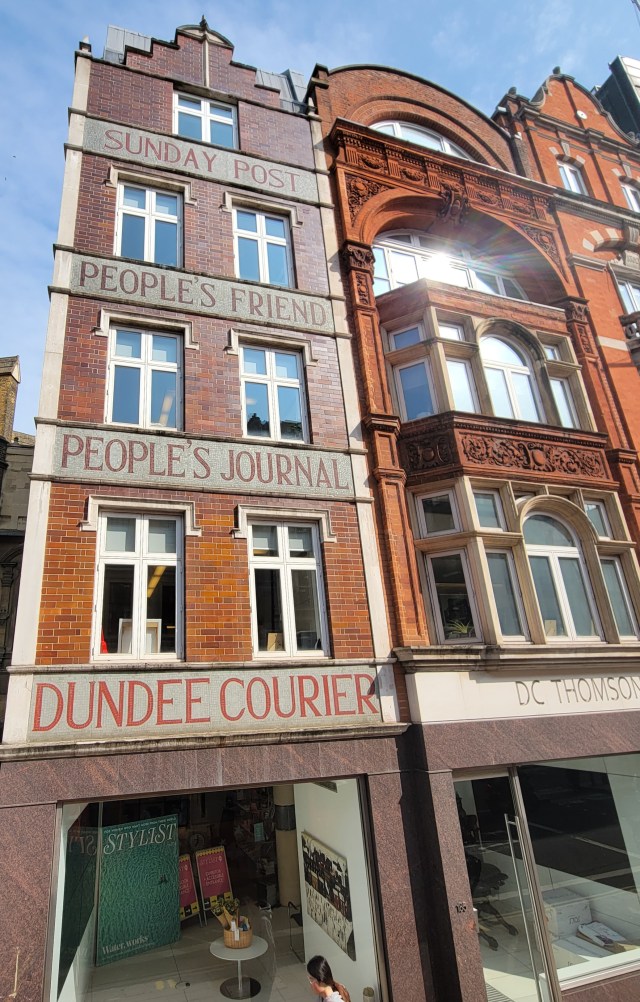
The next day we were tourists. We boarded an open-air bus and cruised around the city. We crossed the River Thames, saw the London Eye on the south shore, and headed back across the river toward downtown and St. Paul’s Cathedral. Along the way, we saw Twining’s Tea, the Dundee Courier building and absolutely astounding architecture. The money that has flowed through London over the ages is astounding.
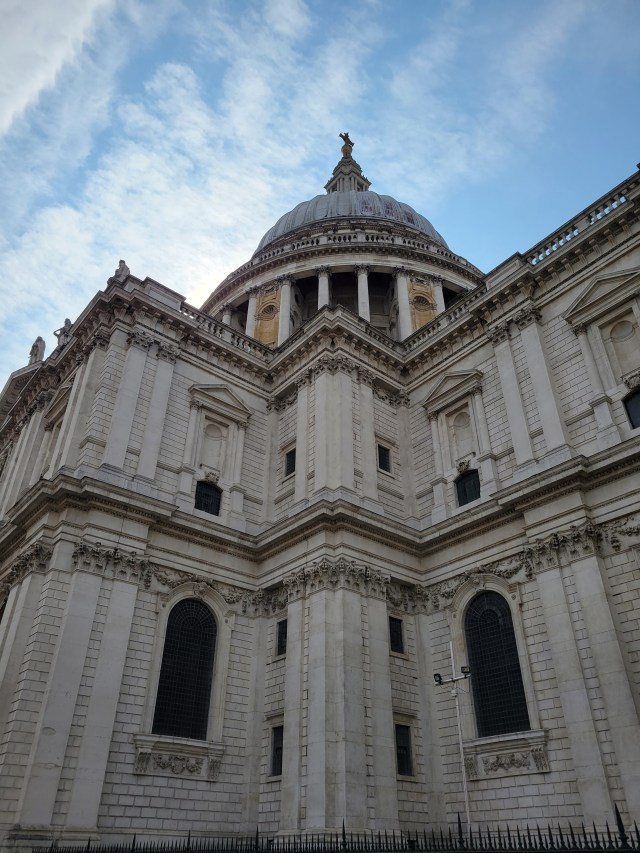
St Paul’s is a mammoth building. We didn’t go inside because it–like everything else–was expensive. As you might imagine, it’s easy to drop $75 (American) at every venue. Actually, I think I budgeted about $175 per day (for two) and we came in just under that, so we did pretty well, but you come to realize that you can’t go into every, single attraction. We walked the perimeter of St. Paul’s and found a nice little coffee shop. We were now in The City of London, also known as the Downtown Area.
Jackie ordered a flat white and I had my usual black tea. In a quiet moment, I asked two British gents two tables away if we were on track for the Tower of London. I also mentioned that it was difficult to navigate because phone was being wonky.
“You’re in a canyon here in The City,” one man said, smiling. “Head toward the river and it will clear up.” I was intending the river, so this was good fortune.
“Thank you very much.” I said.
“Enjoy.”
The Men of England
The interaction with these two blokes was educational for me. The well-to-do men in England are a different breed: Trim about the waist and typically dressed impeccably. Shoes, pants, belt, shirt, haircut. All tight and coordinated. I came from peasants who, fortunately, tend to live a long time.
This made me think that there are many outstanding lineages in the UK that go back multiple generations, along with accumulation of wealth, extensive training and education, and the high attention to detail that comes along with it. I started to pay attention and was impressed by the look of the men in England and feel compelled to say that if reincarnation is true, I would like to come back at least once as a well-dressed Englishman.
As hinted, I come from very little in terms of wealth and opportunity and am lucky to be where I am in life right now as an English professor at a regional university, so coming to the understanding that there have been people living in England and Europe for generations who have had access to private schools and music lessons and tutors and so on is an eye-opening experience. And while I don’t have pictures of the men in the coffee shop, you can do an image search of Michael Portillo of Great British Railway Journeys to get an idea of the style of clothing.
Jackie buys the drinks at the coffee shops as she can speak coffee-shop lingo better than I. As we talked, I couldn’t help but think about British food: Most British food that we encountered was excellent. The apples were normal size and had the words “Grown Locally” on the bag. The eggs had deep yellow yolks and thick whites. I actually lost a pound or two—on vacation!
Upon return, some of my US friends said, “Well, you probably walked a lot” and we did, but I also walk a lot in the US (usually 6,000-8,000 steps daily) but I find it’s much more difficult to lose weight in the US. We also studied labels and there are many ingredients that are banned in British food that are legal in the US. Reinforces, again, the notion that US consumers are essentially unprotected targets for those who want to get rich. I will also say that British food gets dinged for being “bland” but we found it high-quality for the most part, superior to that of the United States in most cases, and delicious every step of the way.
Tower of London, Tower Bridge, London Bridge
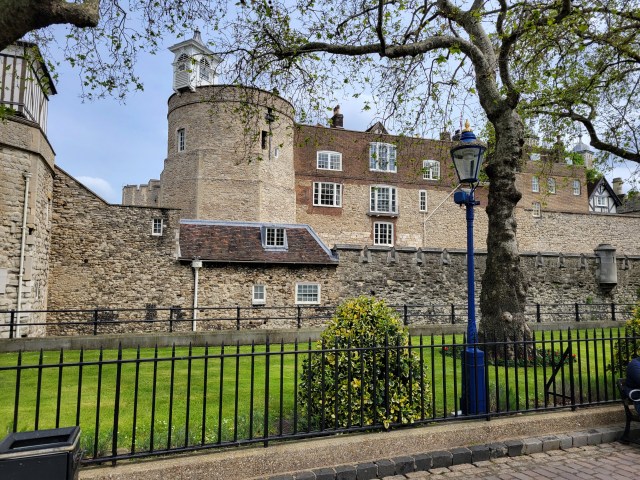
We left the coffee shop, walked a few blocks to The Thames, and strolled eastward along the north bank toward the Tower of London and Tower Bridge. My knowledge of The Tower of London was limited: I can remember watching an old movie called Tower of London, starring Vincent Price and Michael Pate. The story is a fictional account of the rise of Richard III. I remember Vincent Price, who was huge when I was young. He had a horror niche carved out for himself, even as, in real life, he was an art historian and gourmet cook. I also recall a 1939 version of Tower of London, starring Basil Rathbone and Boris Karloff. I’ve seen both movies. I remember in the 1939 version how Richard III would remove a little figurine from a dollhouse with each murder he committed. I’ll never forget that. Saw it when I was young and left a huge impression.
The actual Tower of London was a prison, a torture chamber, and an expression of brute force. A PBS documentary called Secrets of the Tower of London does a pretty good job at explaining the history so I’m not going to go into a ton of detail but I do want to place a historical marker. Coming up through the English Literature side of my education (the other side is Professional Writing and Communication), I was repeatedly told about the year 1066 and The Norman Conquest and while I’ve done my reading and kept a mental bookmark for that date for all of my adult life, I have never seen the other side of that historical event, so to speak. In other words, I knew that there was an invasion–and that it was bloody–but I didn’t fully appreciate the aftermath: William the Conqueror came over from Normandy (northern France) with an army, moved into London, and was crowned king on Christmas Day, 1066.
Once England had been conquered, William had to maintain control, and one of the expressions of that power was the White Tower, built in the 1080s. It was a garrison, prison, and torture chamber, along with being a residence for the king and his supporters. It was also certainly a place for the king to hide if the peasants revolted and came hunting for the crown, which they eventually did in the form of the Peasant’s Revolt of 1381.
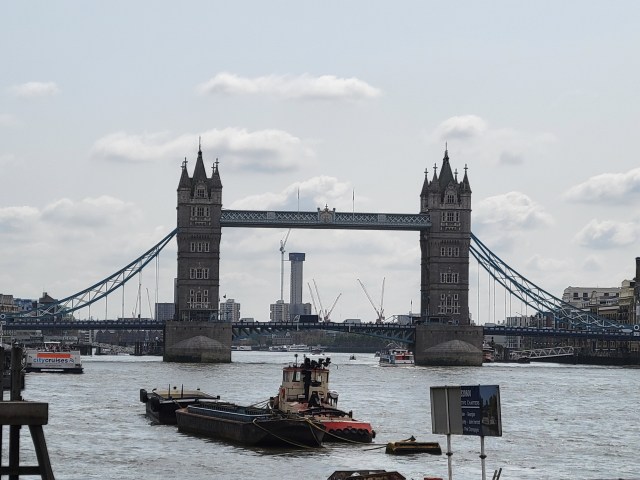
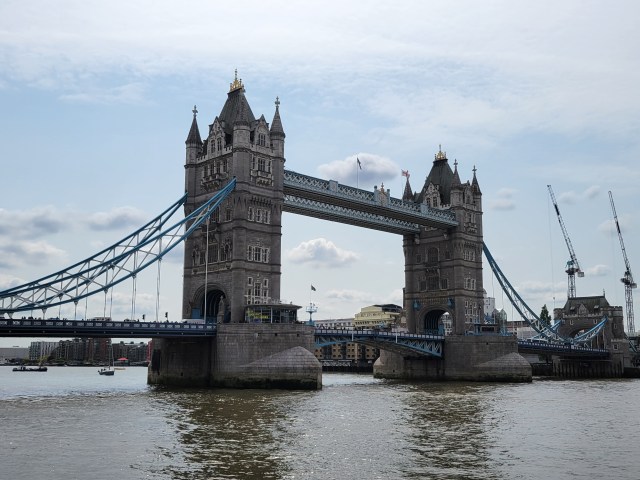
As you might guess, there is a ton of history here. We didn’t tour the Tower of London because I didn’t know enough about the history of the place to propel our steps into the burgeoning queue. Plus, it’s another $90 to get in. If I had it to do over again, we would have done it. It’s just so difficult to know where to splurge and were to keep the wallet in the pocket. If nothing else, it prompts one to delve into the history of such places, in retrospect, which is an enormous reason to travel in the first place. After the Tower, we walked across Tower Bridge, popped into a pub, and waited for the tour bus to pick us up.
One last thought: People often mistake Tower Bridge for London Bridge because it is so majestic and oft-photographed but London Bridge is quite plain by comparison (despite it’s fascinating history). Once upon a time, London Bridge had dozens of houses and shops on the bridge itself. There were entrance gates at each end and commerce was a big part of it. Eventually, it fell into disrepair and was rebuilt (perhaps more than once) in plain fashion.
Slides
Photos below include Jackie in front of the Covent Garden Market, The Astrology Shop, Crown and Anchor, Tour Bus, London Eye, River Thames, Twining’s Tea, Dundee Courier, St. Paul’s Cathedral, Tower Bridge, Tower of London (street view), Tower Bridge. All photos by Michael Downing.
 My Writing Wanderland