
By Michael Downing
with Reilly Fitzgerald
Sometimes, certain things are just meant to happen. In late 2024, I deleted my Threads account. But just before I left, I was lucky enough to bump into the colorful and truly magnificent art of Reilly Fitzgerald, of Newfoundland and Labrador, Canada. I was struck by his work right away: Color choice, definition, technique, and perspective, all were remarkable to my eye.

I’ve probably DM’d three people in my life but I thought I’d take a shot. So I messaged Reilly directly and he responded. We have since become friends. We talk–through email–about art, teaching, politics, culture and Canada.
I told Reilly that I spent a week in Newfoundland during the summer of 2005, visiting my good friends, Art and Sheila Barlow, in Ferryland. Sheila was born in Newfoundland into the Barnable family so it was an honor for me to visit Sheila in her native land. She passed in 2013, sadly, and is greatly missed.
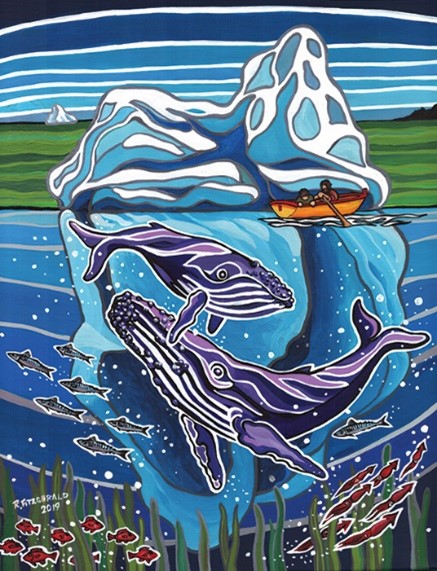
Having hiked a few dozen miles along the East Coast Trail that year, including Brigus South, Shore’s Cove, Cape Broyal, and Ferryland Lighthouse, I was impressed by how well Reilly captured the landscape and the ethos of that vibrant and beautiful part of North America, the Newfoundland and Labrador reation.
I shared some of Reilly’s work with my wife, who is herself an artist, and she really liked it. “Beautiful,” she said. “Perhaps we can purchase a piece someday.”
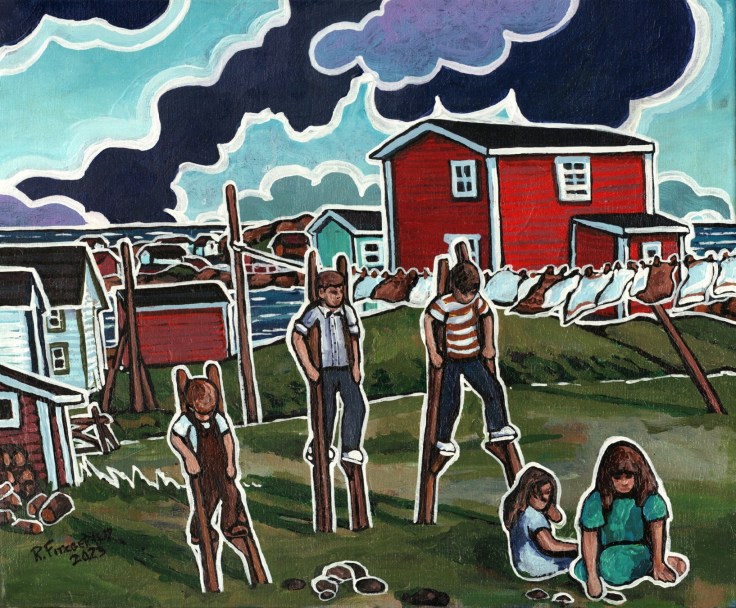
There is magic in the universe, if you open yourself to it. The next month, July 2024, with no particular thoughts of Reilly, my wife and I traveled to Toronto and visited the Art Gallery of Ontario (AGO) where we learned about the Group of Seven Canadian artists:
Franklin Carmichael (1890–1945)
Lawren Harris (1885–1970)
A. Y. Jackson (1882–1974)
Frank Johnston (1888–1949)
Arthur Lismer (1885–1969)
J. E. H. MacDonald (1873–1932)
Frederick Varley (1881–1969)
Tom Thompson is often included in this group. (See The Group of Seven and Tom Thomson by David P. Silcox, ISBN-13: 978-1-55407-154-8). The Group eventually expanded to the Group of Eleven, adding A. J. Casson (1898–1992) in 1926, Edwin Holgate (1892–1977) in 1930, and Lionel LeMoine FitzGerald (1890–1956) in 1932.
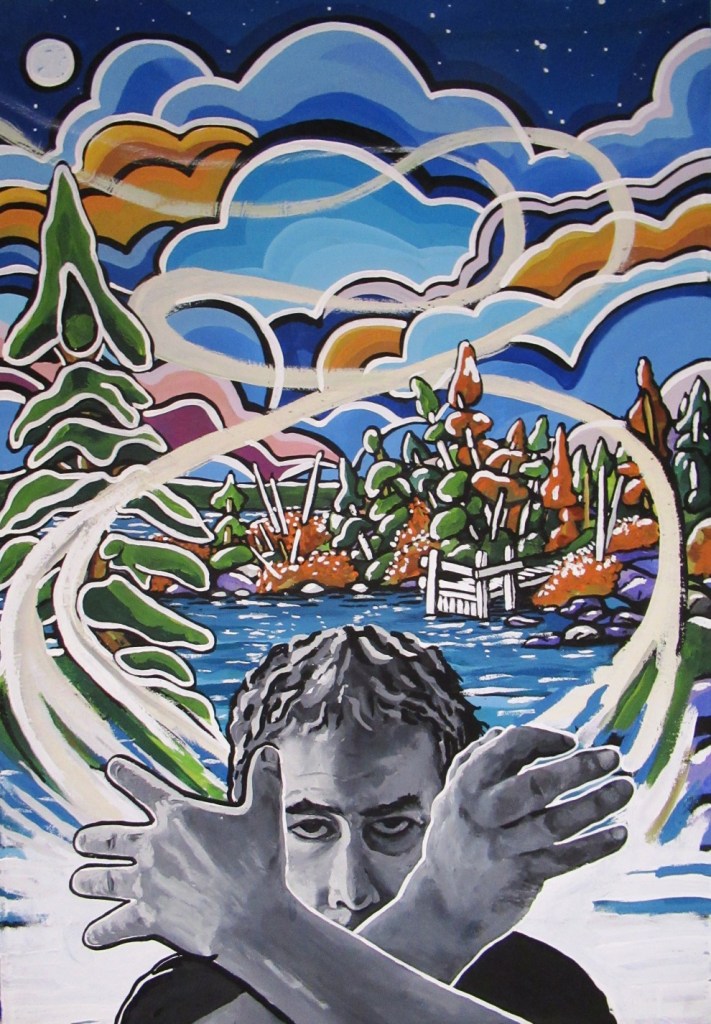
[Note: In addition to learning about the Canadian Group of Seven, we also learned about the Indigenous Group Seven, officially known as the Professional Native Indian Artists Inc. Their artwork in the Art Gallery of Ontario is equally amazing. Perhaps I can turn my attention their work at some point, but for now I’ve been thankful to be learning so much about the Group of Seven.]
For me, at least initially, it was Lawren Harris that really struck a note. I was drawn in repeatedly. And although he is oft known for beautiful, post-impressionist landscapes, what drew me in most were his depictions of houses and everyday scenes.
If you’re following the narrative here, you may guess where this is heading: Lawren Harris’s art reminded me very much of another Canadian artist I knew: Mr. Reilly Fitzgerald.
“Are you familiar with Lawren Harris?” I asked Reilly, one day in an email. This was early-on.
“Absolutely,” he said. “He’s one of my biggest influences.”
This opened an intellectual portal for me, connecting me across time and space to the living world of the Group of Seven Canadian Artists. I was now friends with someone who was participating–in real-time–in that uniquely Canadian artistic movement.
I wanted to tell Reilly’s story in blog form and see how it might evolve, so I asked him to share some basic bio so we could get the ball rolling. Perhaps he would permit me to publish a few images of his work. Well, it’s gone very well. Reilly is a good writer and what I’ve learned has been nothing short of impressive.
I’ve learned that Reilly Fitzgerald is a celebrated and highly motivated Canadian artist who continues to work at his craft despite having difficult days, physically. I’ve learned that he is quite an intellectual and loves debating the finer points of English grammar. We have also found a connection in Canadian music, including this awesome re-make of The Wreck of the Edmund Fitzgerald by The Headstones (originally written by the amazing Gordon Lightfoot). Reilly is also a person who celebrates community and love of family as essential parts of his daily life.
My goal with the following blog posts is to tell the story of Reilly Fitzgerald and the challenges he has overcome to produce his impressive art. I may also dabble in comparing Reilly’s work with the art of the Canadian Group of Seven (Go7).
Should be an intriguing exploration.
Afterword:
I started my exploration of the Go7 by reading quite a bit about Lawren Harris, who made his wealth via the Massey-Harris Company, later known as Massey Ferguson. I’ve since been reading about Tom Thompson. Thompson’s story is tragic, mysterious, and definitely worth reading about. See The Tragically Hip song “Three Pistols,” which hits hard.
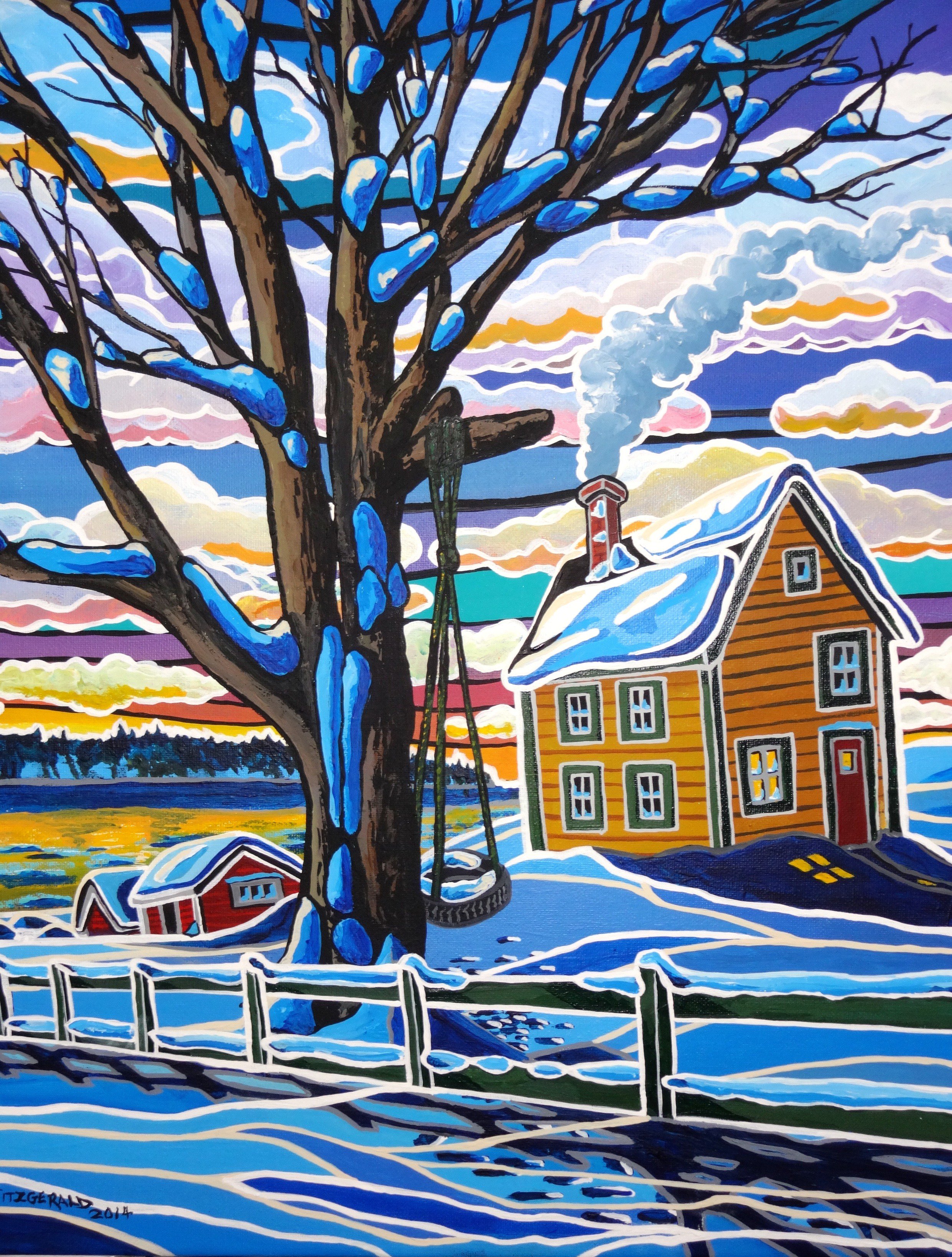
Jackie and I ended up purchasing Winter Sunset, 2014 (above) from Reilly. We paired it with another original work of art by Erika Stearley (404 N Main St) and hung both in our library. They complement one another beautifully and we love them. Our many thanks to Erica and Reilly, as well as Reilly’s daughter, Kaeleigh, who is an accomplished artist in her own right and who helped guide us through the purchase.
 My Writing Wanderland
Leave a Reply